At a certain point, many homeowners realize the problem isn’t where they live; it’s that their home no longer supports the life they’re living. The instinct to move is understandable, especially when new listings promise modern layouts and updated finishes. But in today’s housing market, the decision to relocate carries more weight than it once did. Rising interest rates, limited inventory in established neighborhoods, and the hidden costs of starting over have caused many homeowners to pause and ask a different question: Is moving truly the best solution?
The question isn’t, “Can you move?” – it’s whether moving really solves the problem you’re trying to fix. In locations where lifestyle comes first and has been shaped by generations of proud residents who define what’s cool, meaningful, and vibrant, inventory tends to be scarce. Add elevated interest rates and growing competition for quality locations to the mix, and the cost of picking up and starting over is no longer just financial. It’s personal. More and more, homeowners are deciding that staying put and building forward is the smarter answer.
What Moving Really Buys You
On paper, moving promises a clean slate: your house will be modern, with fresh, new systems and fewer near-term repairs. But in practice, those benefits often come with tradeoffs that are easy to underestimate.
Interest rates remain materially higher than they were just a few years ago, which means even a lateral move can dramatically increase monthly costs. Inventory in desirable neighborhoods is tight, pushing buyers toward compromises on location, lot size, or layout. And many “new” homes, particularly in large-scale developments, prioritize speed and density over architectural character or long-term livability.
Then there’s the disruption. New commute patterns. New schools. New routines. New social fabric to rebuild from scratch. The emotional cost of leaving a place where life already works is rarely captured in a spreadsheet, but it’s real.
The Enduring Value of Place
What makes certain neighborhoods stay special over time is continuity. Places with time-honored traditions, walkable streets, strong schools, and established community rhythms tend to hold value because they can’t be easily replicated. When demand rises, the lucky families who already live there are holding something increasingly scarce.
That’s why many homeowners are choosing to invest in the home they already love, not in a new ZIP code.
Spotlight: Willow Glen, California
Willow Glen has long appealed to South Bay families who prefer charm over novelty. Tree-lined streets, early-20th-century homes, and a walkable downtown centered around Lincoln Avenue have created a neighborhood identity that feels rare and special in Silicon Valley. Cafés, independent shops, weekend farmers markets, and community events anchor daily life, while proximity to downtown San José and major job hubs keep this cozy enclave firmly connected to the region’s economic engine.
As technology and healthcare continue to drive growth across the South Bay, neighborhoods like Willow Glen have seen sustained demand. What family wouldn’t want easy access to schools, parks, and shopping? The houses here tend to reflect an earlier era. Smaller footprints, segmented layouts, and aging systems can limit how well older homes support contemporary life. For those who own property in this highly desirable corner of the South Bay, the sky is the limit. Reimagining an existing home allows residents to preserve their place in the neighborhood while updating the architecture to meet today’s standards for comfort, efficiency, and flexibility.
Spotlight: Scottsdale, Arizona
Have you been to the new Scottsdale? This desert foothill town’s appeal has broadened well beyond its resort reputation. Today, it draws young professionals, entrepreneurs, and families seeking quality of life alongside opportunity. Proximity to business-friendly Phoenix, along with access to Camelback Mountain, McDowell Sonoran Preserve, and established cultural institutions, continues to make the area a long-term destination rather than a temporary stop. The result is a steady influx of interesting people, rising home values, and growing pressure on existing housing supply.
What hasn’t changed is the scarcity of well-located residential land. Many homes in central Scottsdale sit on generous lots in calm areas, often minutes from Old Town, top private schools, and medical campuses. While demand has grown, the underlying street patterns and parcel availability remain fixed. As a result, moving often means giving up a lot, a view, or a location that’s difficult to replace.
For longtime residents, the inflow of new residents reinforces the value of staying put. Rebuilding in Scottsdale allows homeowners to adapt their homes to modern desert living with improved energy performance, indoor-outdoor spatial flow, and luxurious, contemporary layouts without giving up established lots in highly sought-after areas.
Spotlight: Bellevue, Washington
On Seattle’s Eastside, a neighborhood like Bellevue has become a magnet for long-term residents and new arrivals alike because it is welcoming, cozy, and functional. Proximity to major employers such as Microsoft, Amazon, and a growing ecosystem of biotech and cloud-computing firms has brought sustained job growth to the region. At the same time, access to Lake Washington, established public schools, and walkable neighborhood centers has reinforced the Eastside’s appeal for families and professionals looking to settle in for the long haul.
The result is a familiar pattern: demand continues to rise, but land availability does not. Many homes in Bellevue and nearby communities were built decades ago, long before today’s expectations for layout, energy performance, or work-from-home flexibility. Yet the neighborhoods themselves, with their quiet streets, mature trees, and easy access to parks and waterfront, remain deeply desirable.
For homeowners here, moving often means trading ease and stability for uncertainty. Rebuilding offers another option: keep the location that already supports your daily patterns while reimagining your home to match your modern expectations. In a region where place matters as much as opportunity, staying put and building forward has become a deliberate, future-oriented choice.
A Different Way Forward: BUILD
Are you noticing the same pattern we are? High-value neighborhoods with dated houses need not be a dead end. This is where Thomas James Homes’ BUILD program comes into focus.
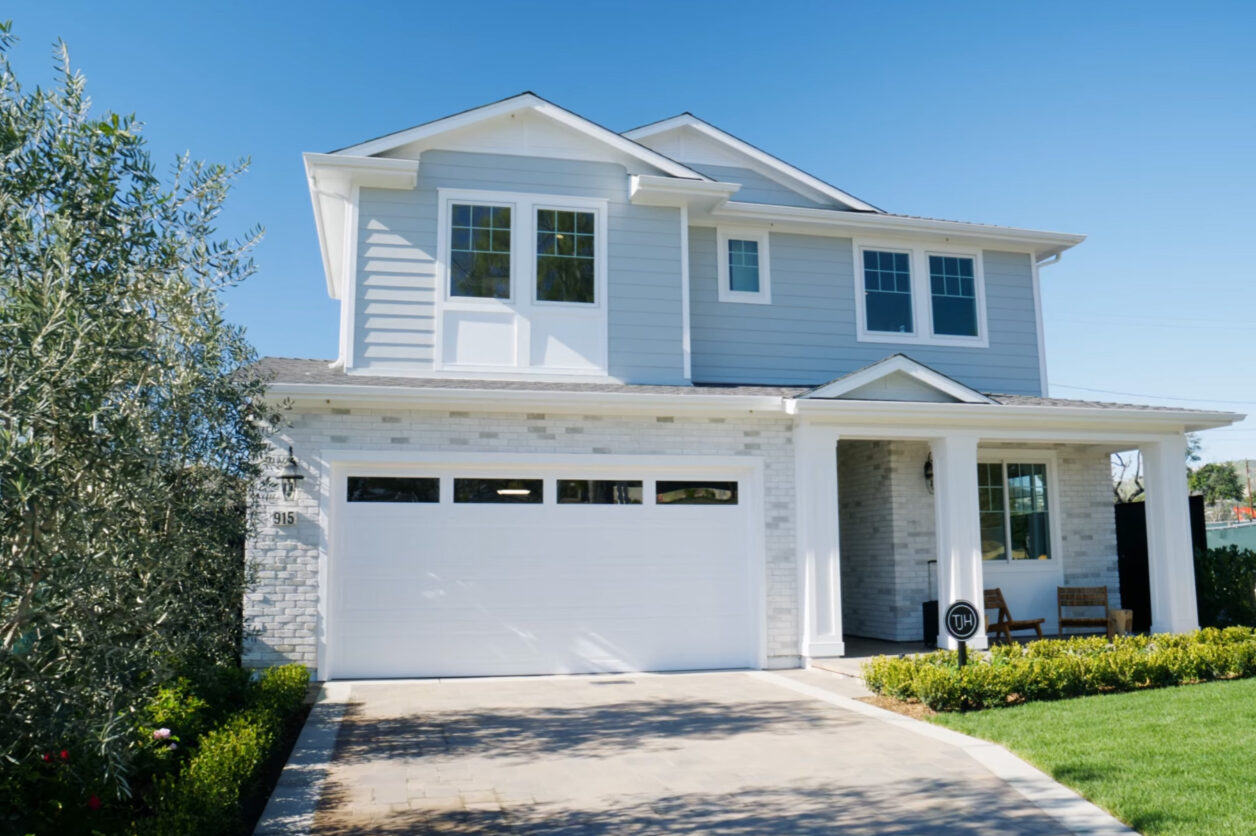
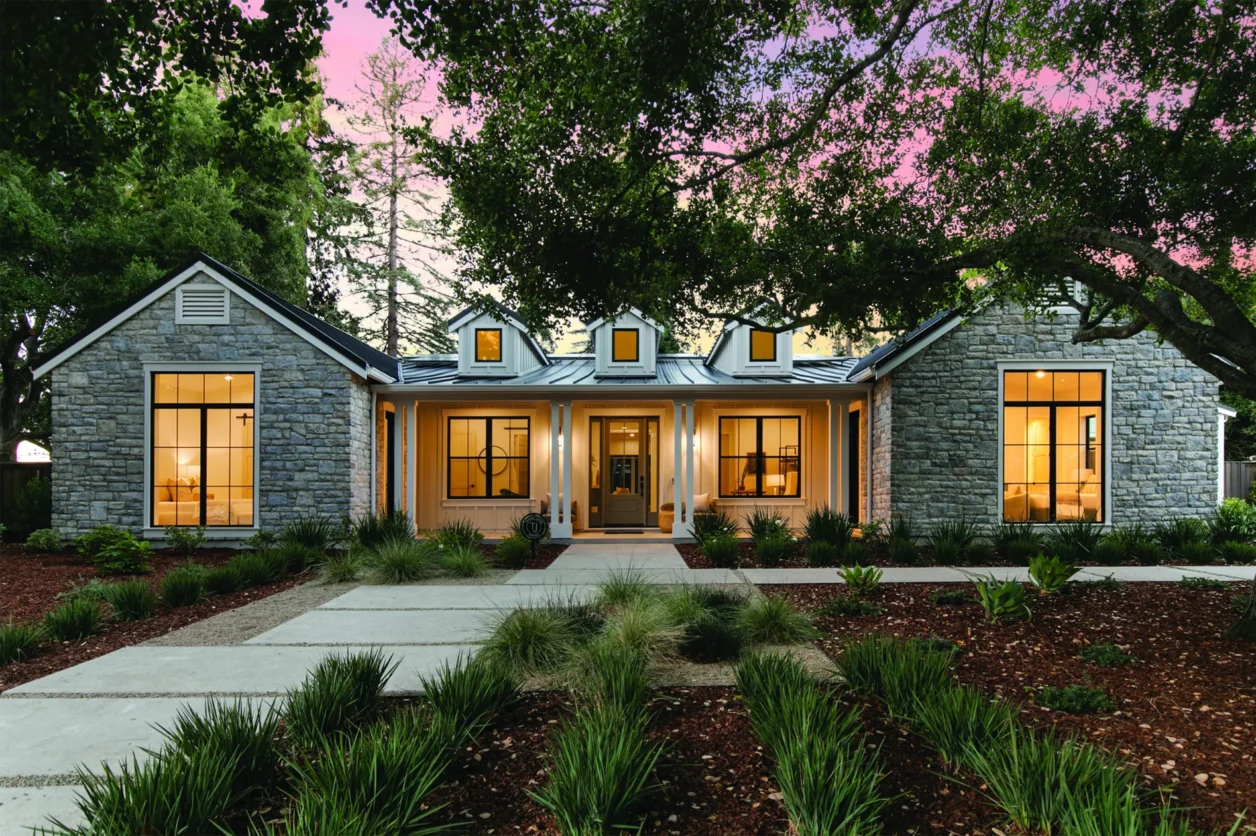
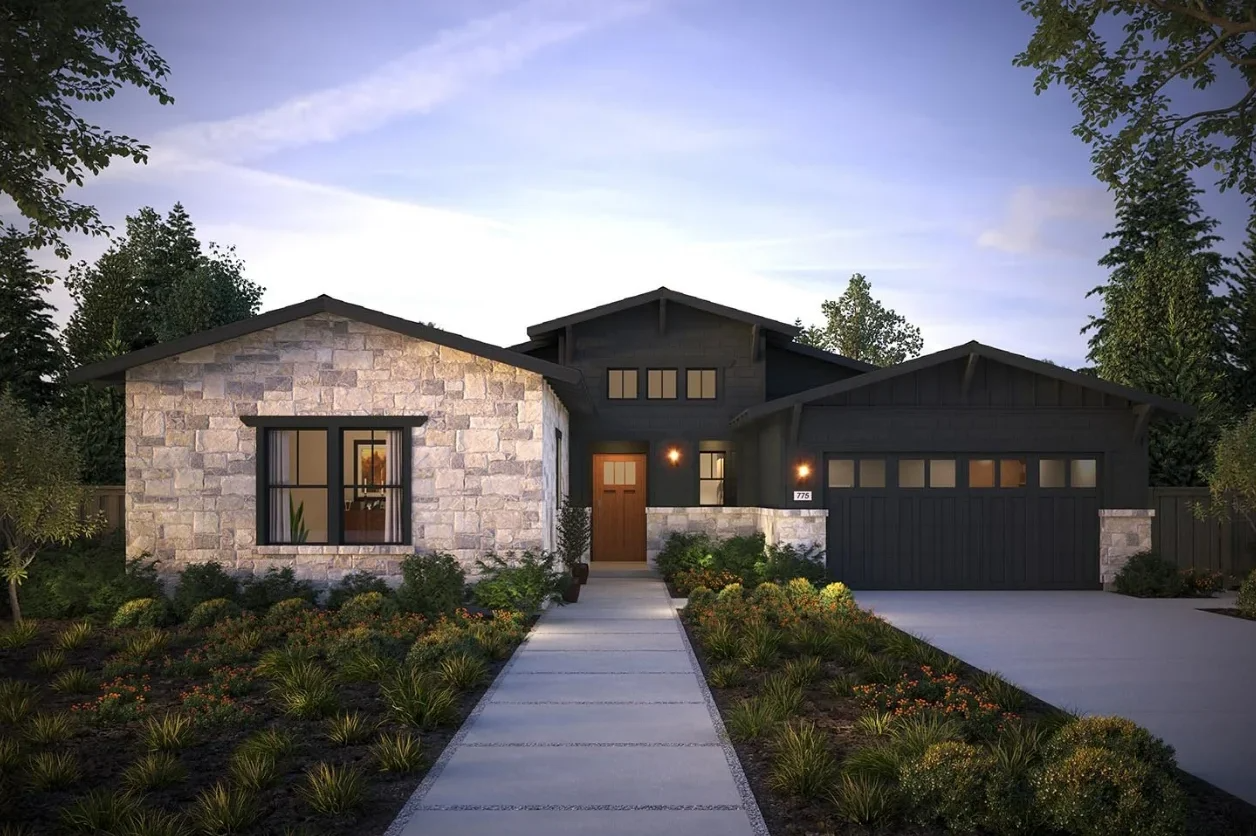
BUILD is designed for homeowners who want to stay exactly where they are but live in a home that reflects how they live now. Rather than navigating a fragmented renovation process – architects here, contractors there, endless decisions and unknowns – BUILD offers a single, integrated path. The end result is a completely rebuilt home from the ground up on your existing lot.
The process begins with feasibility and planning: understanding zoning, lot constraints, and what’s possible. From there, homeowners select from thoughtfully designed plans that can be tailored to their needs, with guidance that reduces decision fatigue rather than creating it. Permitting, demolition, construction, and delivery are managed end-to-end by one team.
The value isn’t just efficiency. It’s clarity. We offer predictable timelines, transparent costs, and a home designed as a cohesive whole, not a patchwork of updates layered over time. In valuable neighborhoods with deep roots and strong futures, the smartest investment is often the one that builds on what already exists: land, community, familiarity, and place. Financially, staying put avoids the friction costs of moving and leverages long-term appreciation in established areas. Personally, it makes your experience more coherent and keeps your life intact.
When the house no longer fits, but the place still does, moving isn’t always the answer. With Thomas James Homes’ BUILD program, staying put can be the best way to honor your roots while building for what’s next.